John Random must have thought I was obsessed with Californian news, because I submitted this less than two weeks after California Here I Go. Perhaps I thought it might replace the morbid execution piece, which by its nature became old news rather quickly.
Unsurprisingly, this “looting” one wasn’t used. But it was submitted in the same pack as You Can’t Hurry Trusts, so you can’t fault John and the cast for their discerning choice of a winner when they saw one.
LOOTIN’ USA
(To the tune of “Surfin’ USA”)
VERSE 1
If everybody was in turmoil,
And causing an affray;
Then everybody’d be lootin’,
Like Californ-I-A;
You’d see ’em wearing their shell suits,
With beard and sandals too;
They’d all be breaking their curfews,
Lootin’ USA.
CHORUS
Insurrection USA They’re starting fires in Long Beach,
Depredation USA And in Fort Lauderdale;
Conflagration USA There’s violence in Pasadena,
Turbulation USA And in San Quentin jail;
Consternation USA All over Manhattan,
Deflagration And down in Santa Fe;
Everbody’s gone lootin’;
Lootin USA.
VERSE 2
We’ll all be planning out a riot,
And then we’ll light my fire;
Then go and nick some hi-fis,
To build a funeral pyre;
Insurgence and arson,
We’re gonna plunder LA;
Tell the fuzz we’re all lootin’
Lootin’ USA
SHORT INSTRUMENTAL (Preferably including some dancing that vaguely resembles people beating each other up)
Everbody’s gone lootin’;
Lootin USA.
Everbody’s gone lootin’;
Lootin USA.
Here is a really weird vid of The Beach Boys making minimal effort to mime Surfin’ USA while wearing bizarre beach outfits:
Mark Keegan was there and it naturally came up in discussion that his father-in-law, David Waddington, passed away last week.
I mentioned that I had mentioned Waddington in one of my early NewsRevue songs. We all agreed that the song might come in handy for Mark and the family over the next few weeks (well you never know). In any case I should Ogblog it pronto for the NewsRevue alumni of our era.
I’m pretty sure this song was used in a couple of runs at that time; the aftermath of the 1992 election.
Well, I was a bona fide NewsRevue writer when I submitted this one, although i might not have known it yet.
But for some reason the then Director, John Random, did not deem this one good enough.
Perhaps the subject, the big bang, didn’t seem topical enough. I think something big bang-ish must have been in the news. I rather like the lyric.
BIGGY BIGGY BANG BANG (To the tune of “Chitty Chitty Bang Bang”)
INTRO
Biggy Bang Bang, Biggy Biggy Bang Bang, Biggy Bang Bang, Biggy Biggy Bang Bang, Biggy Bang Bang, Biggy Biggy Bang Bang: CHORUS 1
Ooohhh, aaahhh, Biggy Biggy Bang Bang, Biggy Biggy Bang Bang’s primeval, And now Biggy Biggy Bang Bang, Biggy Biggy Bang’s believable; Look at all the happy scientists, but they never can explain, Bang Bang, Biggy Biggy Bang Bang’s too big for my small brain, Bang Bang, Biggy Biggy Bang Bang, except for this refrain:
THIS REFRAIN
The birth of the universe, In six lines of rhyming verse, Is likely to be a first, so hark;
The soup is primordial, It looks like lime cordial, A proton, a neutron and quark.
CHORUS 2
Ooohhh {NASA}, aaahhh {COBE}, Biggy Biggy Bang Bang, Big Bang’s cosmological, This {Supa} find {Nova} Biggy Biggy Bang Bang, is so astronomical; See {Mega} how {Giga} all the puzzled journo’s struggle to describe the dross, Bang Bang, Biggy Biggy Bang Bang, but they’re all at a loss, Bang Bang, Biggy Biggy Bang Bang, and no-one gives a toss. {Biggy Biggy Bang Bang, Biggy Biggy Bang Bang primordial Biggy Biggy Bang}
Below is a video of the song Chitty Chitty Bang Bang
The very helpful and encouraging Spitting Image people (especially Bill Dare and Giles Pilbrow) eventually encouraged me to contact NewsRevue, primarily because my songs tended to be very topical, whereas Spitting Image tended not to do topical musical numbers. I was not only encouraged but also rather chuffed to see a W2 address for the Canal Cafe Theatre. Within walking distance seemed convenient enough for me.
At NewsRevue my correspondence found a welcoming John Random inviting me to a writers’ meeting on 2 April 1992, which will be the day I first met several “friends of decades” and the first time saw NewsRevue. A young Jacquie Somerville was directing that run, much to the chagrin of the regular writers, as she was primarily using material from her own troupe, which I believe included Reece Shearsmith, together with material written by her pal Andrew Whelan. But John told me at that writers’ meeting that he was due to take over as director of the next run shortly.
I hope to write up that early journey from juvenilia towards NewsRevue via Spitting Image more fully at some stage; there is quite a fat file of my correspondence and early efforts.
There was no YouTube or e-mail with attachments in those days. I must have spooled a copy of the Jolson verse/chorus from my trusty reel-to-reel onto a cassette. The WP file of the lyrics is time stamped 08:12. I think I heard the news that execution had been stayed on the Today programme shortly after 8:00 (just after midnight California time), so I concluded the lyric with a stay of execution and dropped a package off by hand at the Canal Cafe Theatre on my way to work.
By the time I got home from work that day, Robert Alton Harris had been executed. I wasn’t sure what that existential change to the ending would do for the fate of my topical song, but of course in the hands of seasoned topical satirists like John Random and Chris Stanton, such last minute tweaks are merely par for the course.
So, when I went to the writers meeting on 23 April, I was thrilled to see my little song on the running order for that week’s show. I was even more thrilled to see my song performed. It turned out, of course, to be the first of many.
I seem to recall a slightly gruesome yet somehow amusing “snuffed” head gesture by Chris Stanton to conclude the song appropriately, despite the lyric. I cannot remember who else was in that cast; John Random will no doubt remember; he remembers most everything. Ian Angus Wilkie I think… But enough of my 2016 waffle, here is the full extract of the lyrics of my debut NewsRevue song from 1992:
♬ CALIFORNIA HERE I GO ♬
(To the tune of “California Here I Come” – but strictly no blackface when performing this please)
INTRO
When the calls for death start growing,
And guillotines are starting to fall;
That’s when I am westward going,
To the place that kills ’em best of all.
California, I’ve been blue,
I’ve not seen death since ’62;
I can’t wait ’till blood starts flowing,
Even now I’m starting to call:
CHORUS 1
California here I go,
See the Nightmare on Death Row;
Where killing, is thrilling, oohh what a gas,
San Quentin, is rentin’, programmes, seats and opera glass.
The show’s soon startin’, don’t be late,
Watch the bad guy meet his fate,
In a snuff movie by the State,
California here I go.
CHORUS 2 (More slowly – different singer?)
California, here I go – yeh,
Back and forth along death row;
You oughta, try slaughter by electric chair,
Say hello to gallows, gassing folks is not quite fair.
This was the last of my “pre-NewsRevue era” comedy lyrics – another 1992 election-oriented lyric. I wrote the lyric 3 April although the log credits it as 8 April ; the election was held 9 April. No-one expected the Tories to retain power in that election, but they did.
WILL YOU BELIEVE ME TOMORROW? (To the tune of “Will You Still Love Me Tomorrow?”)
TORY
The night is ours completely, Tho’ we campaigned effetely; Tonight, the Right, was given a kickstart, Will you believe me tomorrow?
LABOUR
We’ve won by every measure, Much to the Tories’ displeasure; So, after all, this nation has a heart, Will you believe me tomorrow?
ALL
Tonight with words multifarious, Spin doctors claim that we’ve all won; Their quotes may seem hilarious, Once in print, in the Times and Sun.
LIB/DEM
This is our finest hour, We hold the balance of power; We, in our dreams, prepare for Government, Will you believe me tomorrow?
ALL
We, in our dreams, prepare for Government, Will you believe us tomorrow?
(Backing vocals for the three political verses as follows: Sha-la-lub-sha, sha-la-lub-sha, sha-la-lub-sha, sha-la-lub-sha, Sha-la-lub-sha, sha-la-lub-sha, sha-la-lub-sha, sha-la-lub-sha; Aaaaaaaaaaaaaa, aaaaaaaaaaaaaa, aaaaaaaaaaaaaa, aaaaaaaaaaaaaa, Will you believe me tomorrow?)
3 April 1992
Below is a video of The Shirelles singing Will You Still Love Me Tomorrow:
In remembering Chris Stanton, who died 9 March 2020, I refer to his masterful private performance of John Random’s superb 0898 song.
For those who don’t know what I’m talking about (and also for those who do), I’m pretty sure that John won’t mind me upping his lyric sheet for 0898 – click here.
And for those who are not sure what the tune might sound like, the following vid plays the best known version of the song, “Busy Line”, performed by Rose Murphy, upon which 0898 is based.
Please take my word for it that 0898 was traditionally delivered about 50% faster than Busy Line.
This is another comedy lyric written around the time I found out about NewsRevue but probably written for my own/friends amusement. It was around the time of the 1992 election.
FLAGS OF CONVENIENCE (To the tune of “The Red Flag”)
RED
The people’s flag is deepest red, It shrouded oft our martyred dead; And ere their limbs grew stiff and cold, Their heart’s blood dyed its every fold.
Then raise the scarlet standard high, Within its shade we’ll live or die; Tho’ cowards flinch and traitors sneer, We’ll keep the red flag flying here.
BLUE
The bosses flag is deepest blue, It helps us tell men what to do; And when they’re fighting in a bar, Its azure lights the Panda Car.
Then raise the sapphire flag a while, Within its shade we’ve made a pile; Tho’ Unions flinch and workers sneer, We drink fine wine, they swig warm beer.
YELLOW
The Liberals flag is yellow/gold, The colour isn’t very bold; And as we can’t make up our minds, We’ve changed our name a dozen times.
Oh jaundiced banner in the skies, Within your shade we’ll compromise; Tho’ Tories punch and Labour pound, We’ll occupy the centre ground.
GREEN
The Eco flag is crispest green, We like to keep our standard clean; And tho’ it sounds incré-dible, Our flag’s biodegradable.
Oh verdant banner in the breeze, Within your shade, no CFCs; Tho’ dross decay and wastrels wear, We’re going to save the ozone layer. 27th March 1992
I also wrote an update of this lyric in the Autumn of 1994; I don’t think that it was used in NewsRevue either, but it might have been:
FLAGS OF CONVENIENCE – AUTUMN 1994 REMIX (To the tune of “The Red Flag”) RED The people’s flag is deepest red, It shrouded oft our martyred dead; And ere their limbs grew stiff and cold, Their heart’s blood dyed its every fold. So raise the scarlet standard up, In deepest pooh we’ve ended up; Tho’ unsure what the ‘ell it’s for, We took the cause out of clause four. BLUE The bosses flag is deepest blue, It helps us tell men what to do; And when they’re fighting in a bar, Its azure lights the Panda Car. So raise the sapphire flag a while, Within its shade we’ve made a pile; Tho’ Unions flinch and workers sneer, We drink fine wine, they swig warm beer. YELLOW The Liberals flag is yellow/gold, The colour isn’t very bold; Tho’ we’re broad-minded on our jogs, We’re Fascists on the Isle of Dogs; Oh jaundiced banner in the skies, Within your shade we’ll compromise; Tho’ Tories punch and Labour pound, We’ll occupy the centre ground. GREEN The Eco flag is crispest green, We like to keep our standard clean; And tho’ it sounds incré-dible, Our flag’s biodegradable. Oh verdant banner in the breeze, Within your shade, no CFCs; Tho’ dross decay and wastrels wear, We’re going to save the ozone layer.
I think I only went on one occasion to join John White and his mates watching The O’s (Leyton Orient Football Club) on a Saturday afternoon.
I have uncovered a diary entry on 21 March 1992 which reads:
1.30 Northcote
Johnboy Soccer
This must be the one.
So our afternoon started in The Northcote…
…no, not THAT pub in Northcote Road near my dad’s old Clapham Junction shop – don’t be stupid…what use would that be ahead of an O’s home match?
The Northcote Arms, Leyton. I’m hoping that John and his mates will forgive me if I remember little about the pub at that time. It was a pub. It served beer. The beer was palatable, at least to the extent that I imagine that we all drank more than one pint before heading off to Brisbane Road.
The other thing we did while in the pub was to plot my admission to the ground. You see, unlike Lord’s, where I welcome guests into any part of the ground as long as they are suitably attired…
…at that time, at Brisbane Road, in theory, the members terrace was for members only. An exclusive place…
…ah, with a fine cricketing heritage. That might explain something.
There were a few of us – forgive me again I cannot remember all of the attendees that day. Me and John (obvs), Nick (central to my memory of this part of the story), Arnold I am pretty sure, plus a couple of other people.
The cunning plan was for one member of the party, once through the turnstile, to pass his membership card back out to one of the other members in our group, who would relay the pass to me and I would thus gain entry to the members area. No bar codes in those days. No electronic barrier. Just a ticket-lady and an old-fashioned turnstile.
This device was going according to plan until Nick, who was just ahead of me in the relay, dropped the pass and ended up scrambling on the ground for it in full sight of the turnstile lady.
Nick looked up, with a look of fear on his face, at which the ticket-lady said:
I’m sure I’ve told you lads before – we don’t mind you bringing the occasional friend in with you, if you want.
Nick’s look of fear turned to a look of shame as she smiled and stewarded us all through to the members terrace.
The members terrace looked little different from the other terraces and the stands, which were rather sparsely populated. There was a pocket of a few hundred Torquay fans on the other side.
I remember us all procuring a paper cup with piping hot brown liquid which, I was assured, was tea. This helped to keep us warm on a cold day for a few minutes at least. I think we might have repeated the tea-hand-and-gut-warming process a couple of times during the match.
In those days Leyton Orient was in a division known as League 3, which I believe might have been known as The Fourth Division “back in the day” and is now known as League Two. You see how a popular sport like Association Football keeps these matters simple, whereas cricket insists on complicating things.
I conducted a quick head count of the crowd and arrived at a total of 3,636. Not bad. I also very clearly remember that The Os won the match 2-0, much to the delight of John and his mates…
I don’t remember what we did after the match, but I suspect that a return visit to The Northcote Arms or a different pub of similar quality might have formed part of the aftermath.
So much did I enjoy the afternoon, I surely said that I would like to join them again some time at another match. I surely meant it when I said it and writing now, some 28 years later, I still think I might like to go to a football match again at some point in the future.
John Sitton, doyen of Leyton Orient in that era although, as it happens, exiled to Slough during the season of my visit.
I think this lyric and one or two others in the run up to the 1992 general election, coincided with my first visits to NewsRevue at the Canal Cafe Theatre. I’ll need to rummage my physical correspondence files for chapter and verse on that.
But I was also just sort-of writing this stuff for friends and my own amusement.
I’m pretty sure this one formed part of my early submission pack to NewsRevue but it wasn’t used.
It has some quite good ideas in it, though.
REALLY SAYING NOTHING
(Sung to the tune of “Really Saying Something”)
1st BIT
I was walking down the street, ({CHORUS} Dowaddywaddy) When a pollster came up to me; ({CHORUS} Oh yeh) He shook me by the throat, ({CHORUS} Dowaddywaddy) And asked me which way I would vote. “Is it Tory or Labour; Kinnock or Major?”
I said: They’re all really saying nothing, really saying nothing, {BOTH} Ba ba sooky do wah, ba ba sooky do wah.
2nd BIT
I was watching my TV,({CHORUS} Dowaddywaddy) John Major was lecturing me;({CHORUS} Oh yeh) “Avoid Labour’s double whammy,({CHORUS} Dowaddywaddy) And Paddy Ashdown’s handshake is clammy. If you want hope and glory, you should vote Tory”.
But: He was really saying nothing, really saying nothing, {BOTH} Ba ba sooky do wah, ba ba sooky do wah.
INSTRUMENTAL BIT (During the instrumental the following voiceover from Paddy Ashdown is rendered):
“We Liberals firmly believe that we are really saying something. And yet, in many ways we are really saying nothing. Vote Liberal, the only party prepared to state, quite categorically, that we aren’t really saying whether we are really saying something or not.”
3rd BIT
I then went to my town hall, ({CHORUS}Dowaddywaddy) Where Kinnock was giving his all; ({CHORUS}Oh yeh) “John Major is a creep, ({CHORUS}Dowaddywaddy) And Liberals prefer it with sheep. You will live longer later, linking with Labour”.
Cripes: He was really saying nothing, really saying nothing, {BOTH} Ba ba sooky do wah, ba ba sooky do wah.
{CHORUS}We’re all really saying nothing, really saying nothing, {BOTH} Ba ba sooky do wah, ba ba sooky do wah. 14 March 1992
Below is a video of the Velvelettes singing Really Saying Something:
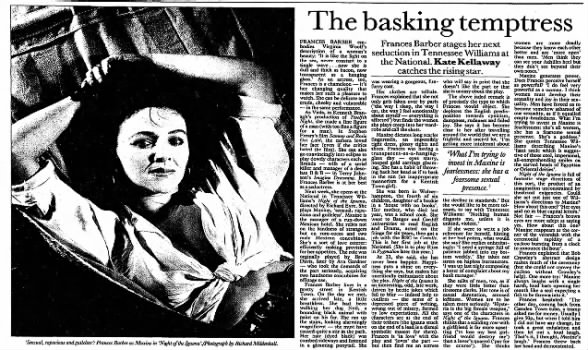
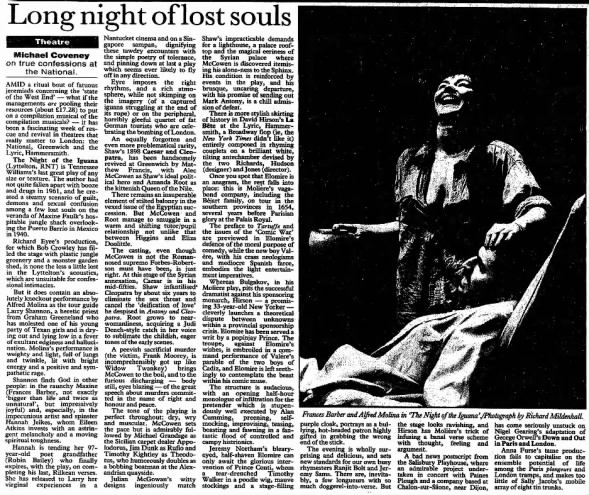
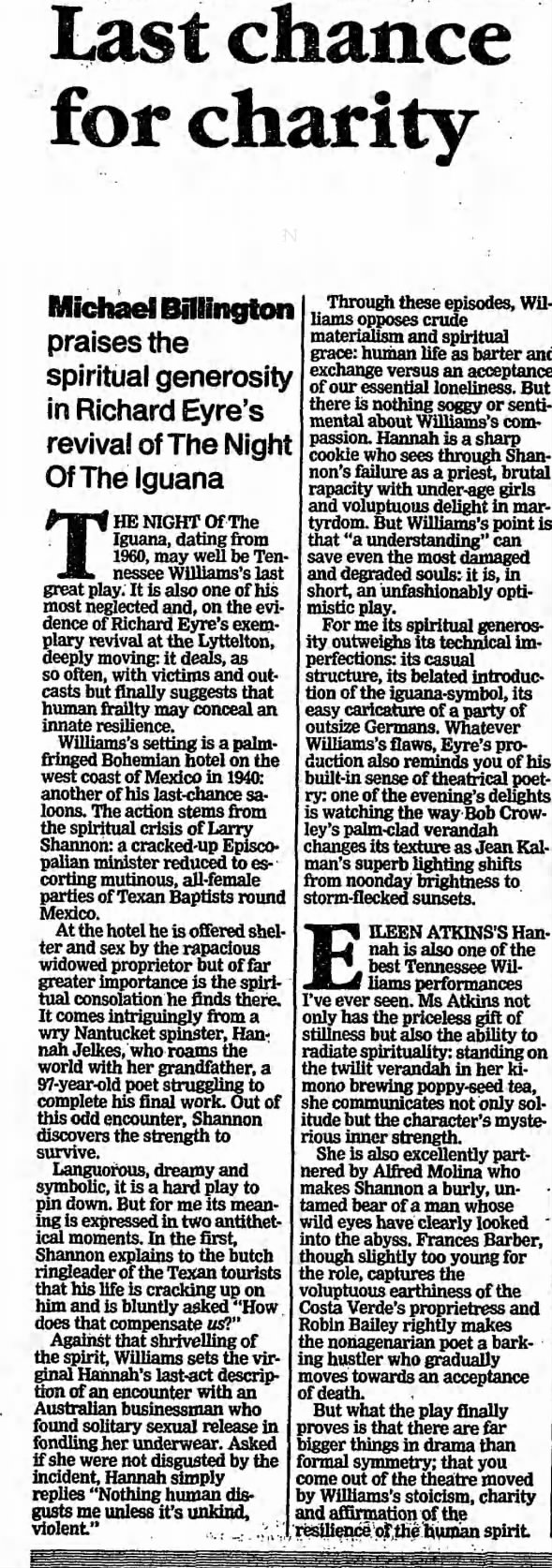
I wrote in my log and I remember this production as such too. In 1992 I was still going to this sort of production with Bobbie as long as she was available, which most often she was, despite her protests that mebooking stuff so far ahead meant she couldn’t/wouldn’t guarantee her availability.
Bobbie was there for this one.
I’m pretty sure I had seen Bobbie the night before as well. The diary simply says “clubbing” which, as I recall it, meant a West End evening with Bobbie and several of her law reporter friends.
I remember the evening of Friday 13 March 1992 clearly, because I almost lost my life earlier that day on the M11, driving out to see Schering, when a lorry shed its load of timber on the two-lane motorway ahead of me and I had nowhere to go (other than into a central reservation barrier to the right or into the vehicles to my left) so I slowed down as much as I could through the timber and then vehicularly limped to the hard shoulder to have my broken car and shaken me rescued.
I must have bored everyone shitless with my Friday 13th story that previous evening and for sure the events of the day and evening of 13th were small beer compared with the drama that unfolded at The Lyttelton on the Saturday Night.


.jpg)